
When Joel Spencer isn’t leading science across his district, he’s diving into another passion: hosting his own podcast about autonomous vehicles, EV Geek. That same curiosity and drive to explore complex ideas is exactly what Joel brings to science education across Little Rock School District.
Success story highlights
Little Rock School District improved science achievement and student engagement using Gizmos science simulations. Through the Science Success Grant, the district expanded access, supported teachers with professional learning, and aligned instruction to standards across K–12 classrooms.
Results at a glance
- 50-60% growth in some low-achieving schools
- Increased science proficiency across the district
- Strong teacher adoption and usage rates
How Little Rock adopted Gizmos through the Science Success Grant
Currently serving as the Arkansas district's K-12 Science Coordinator, Joel brings his deep classroom experience to his day-to-day decisions and work with science. From classroom teacher to literacy coach to science lab leader, his 23-year educational journey in Little Rock reflects his passion for helping students truly engage with concepts.
Now supporting all science instruction for over 19,000 students in the district, Joel works to align curriculum goals, train teachers, and implement new technologies and resources to improve science instruction.
Bringing Gizmos to elementary students
The district discovered Gizmos virtual simulations years ago and, more recently, participated in the Science Success Grant program to expand access for elementary school students. The Science Success Grant allows teachers to use Gizmos with meaningful professional learning support.
Gizmos stand out to teachers in Little Rock School District not just for their interactivity, but for their standards alignment, flexibility, customizable supplementary materials, and connection to real-world science practices and standards. After seeing strong success with Gizmos at the middle and high school levels, Joel recognized an opportunity to expand into elementary classrooms.
Partnering with Grant Specialist Tia Brown, he focused on strengthening science instruction in grades 3–5 with Gizmos. “We needed to beef up our [grades] 3–5… Before I pushed [Gizmos] out to the mass audience, I wanted to see how it worked. I don't want to buy something in here and get something, and teachers hate and we've lost all that money,” said Joel.
The Science Success Grant provided the ideal way to pilot Gizmos in elementary classrooms, train teachers, and evaluate impact. And the approach paid off. “Looking at our usage report, we had really good Gizmos usage last year in grades 3–5,” said Joel, giving him the data and confidence to expand and continue building teacher support.
Listen to Joel’s full interview!
Gizmos in action in Little Rock classrooms
Successful implementation in Little Rock has been intentional. Joel and his team embedded Gizmos directly into district curriculum maps so teachers don’t have to guess how or when to use the STEM simulations. “There's no guessing. I try to make it as easy as possible for teachers,” said Joel.
That clarity helped drive adoption, and teacher response has been overwhelmingly positive. “I have never come across teachers who say they don't like using Gizmos. They really like using them.”
Flexible instruction to meet unique classroom needs
Gizmos also support flexible lesson planning. Teachers can guide students through activities, differentiate instruction, and use built-in resources without having to create everything from scratch. “You have all the resources there. You don't have to create anything. It's there,” said Joel.
Connecting science and literacy with Gizmos
The virtual simulations make it easy to connect science and literacy without adding extra work. As Joel shared, “That's when I found out the literacy connections, where it breaks it down into smaller chunks.”
With built-in slideshows and scaffolded supports, teachers use Gizmos to meet a range of student needs while reinforcing core literacy skills. In some cases, lessons even align directly with texts used in ELA, allowing teachers to bridge learning across subjects. “The book that [Gizmos recommended] to use as the read-aloud was the same book that we use in our core literacy.”
Student engagement and real-world learning
In classrooms, Joel regularly sees high levels of student engagement with Gizmos. “Students are working. They're using their discourse strategies, turning and talking… they're understanding how science works through the Gizmo.”
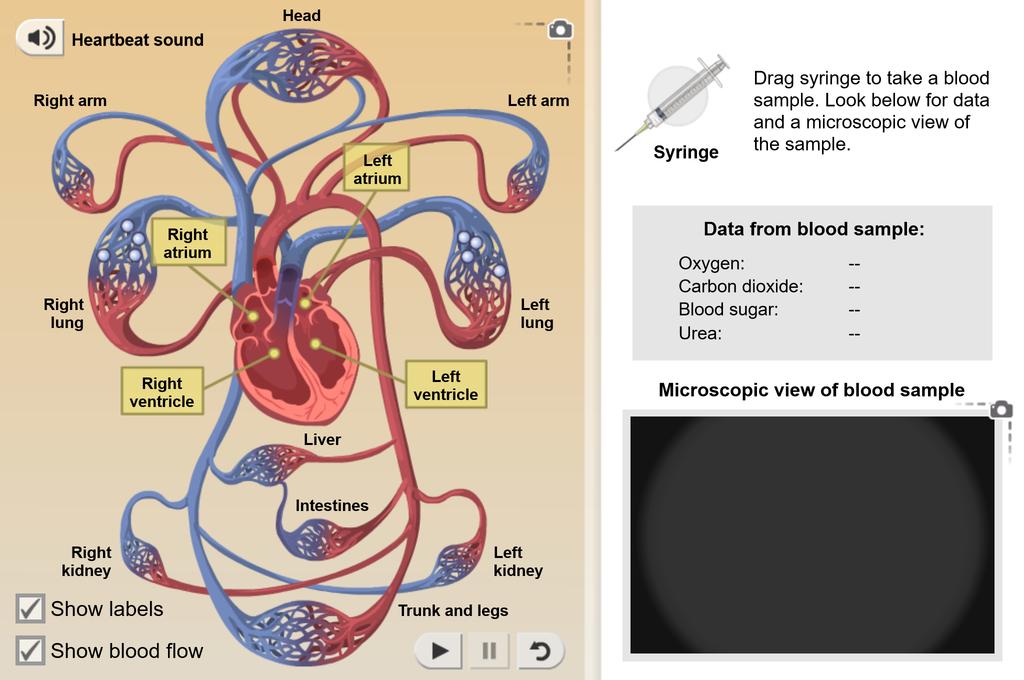
Instead of passively learning, Gizmos help students experience science in action. “They're actually getting to see how the blood flows through the circulatory system… They can actually see that and manipulate it.” That interactive experience keeps students involved because, as Joel emphasized, “It's not a sit and get.”
Using Gizmos to support standards and prepare for assessments
For Joel, alignment to standards is essential. “We can't teach anything that doesn't go back to our state standards.” Gizmos make that alignment easier by directly connecting instruction to required standards while supporting science and engineering practices.
They also prepare students for what they’ll encounter on assessments. “The same simulations they do in Gizmos are the same types of simulations they have to do on the state test in the spring,” said Joel. With consistent exposure, students build both content knowledge and confidence.
Even more powerful is the continuity across grade levels. “If students start getting Gizmos in third grade, they'll have them third, fourth, fifth, sixth, seventh… we don't have to train the kids how to do a Gizmo.” This consistency creates a cohesive K–12 experience, no matter what other curriculum resources are in place.”
Improving student growth and science achievement with Gizmos
In Little Rock classrooms, the data tells a clear story of growth with Gizmos. Over the years, Joel has noticed a clear connection between Gizmos usage and student performance. “Not only are our students growing from different levels, but we're having students become more proficient in science.”
“I get that asked all the time when we look at our interim assessments. They ask, ‘What are you doing to achieve such high growth in science?’ I'm not doing anything. Our teachers are using Gizmos. If you look at the data, because everything I do is data-driven, the schools that use Gizmos are the ones that, for the most part, have the most growth in science.”
–Joel Spencer, K-12 Science Coordinator

That growth is especially significant among students who need it most. “We're seeing 50 to 60% growth across some of our low-achieving schools,” said Joel. Even when proficiency takes time, the trajectory is clear: “You may not have 100% proficiency, but we're seeing that growth.” For Joel, that steady progress is a key indicator that the approach is working.
Strong implementation and professional learning with a Science Success Grant
A major factor in Joel’s success with Gizmos across the Little Rock School District has been the level of support from the Gizmos team. “It's been an ongoing training process… ExploreLearning has been great. They come in and do all the PD for us,” said Joel.
That partnership extends to ongoing coaching and responsive support when teachers need it most. “It's been pretty flawless. It's probably been one of the easiest implementations I've had to do.”
Explore Gizmos for your school or district
If you're looking to strengthen science instruction, support your teachers, and drive meaningful student growth, Gizmos can help you get there faster, with the implementation support to make it sustainable.
Contact our team to learn more about Gizmos or the Science Success Grant program. Or try Gizmos in your classroom today!